






Customer Case Studies
The effect after the introduction is that we have reduced the number of man-hours by about 1/10 at the very least.
I also think that the accuracy of product considerations and the speed of response, which are unique to two-color molding, have improved significantly.
Automobile
OA equipment
Plastic mold
Plastic molding
Mass production study
Sales quotation
Two shot molding
Number of Installations:
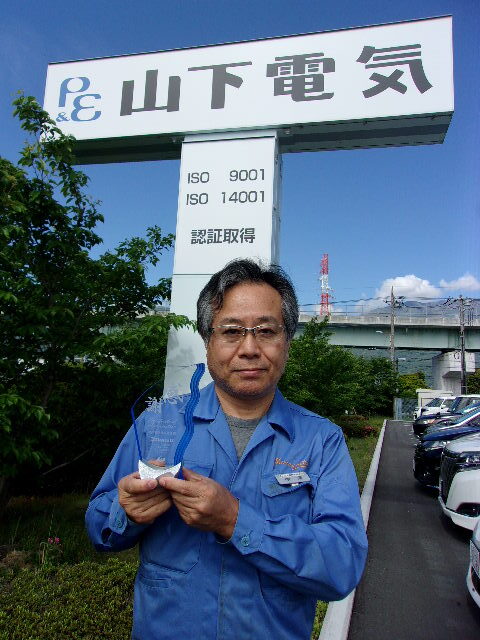
YAMASHITA ELECTRIC CO., LTD.
Yamashita Electric Co., Ltd., headquartered in Shinagawa Ward, Tokyo, is a parts manufacturer that was the first in Japan to introduce two-color molding technology to keycaps (the part of a keyboard that has letters written on it) in 1964.The company's integrated production encompasses plastic molding, mold making, and painting. We spoke with Kazunori Nakazawa, Deputy General Manager of the Manufacturing Department, at the Yamanashi Plant, the group's largest.
For our sixth installment, we visited YAMASHITA ELECTRIC CO., LTD.
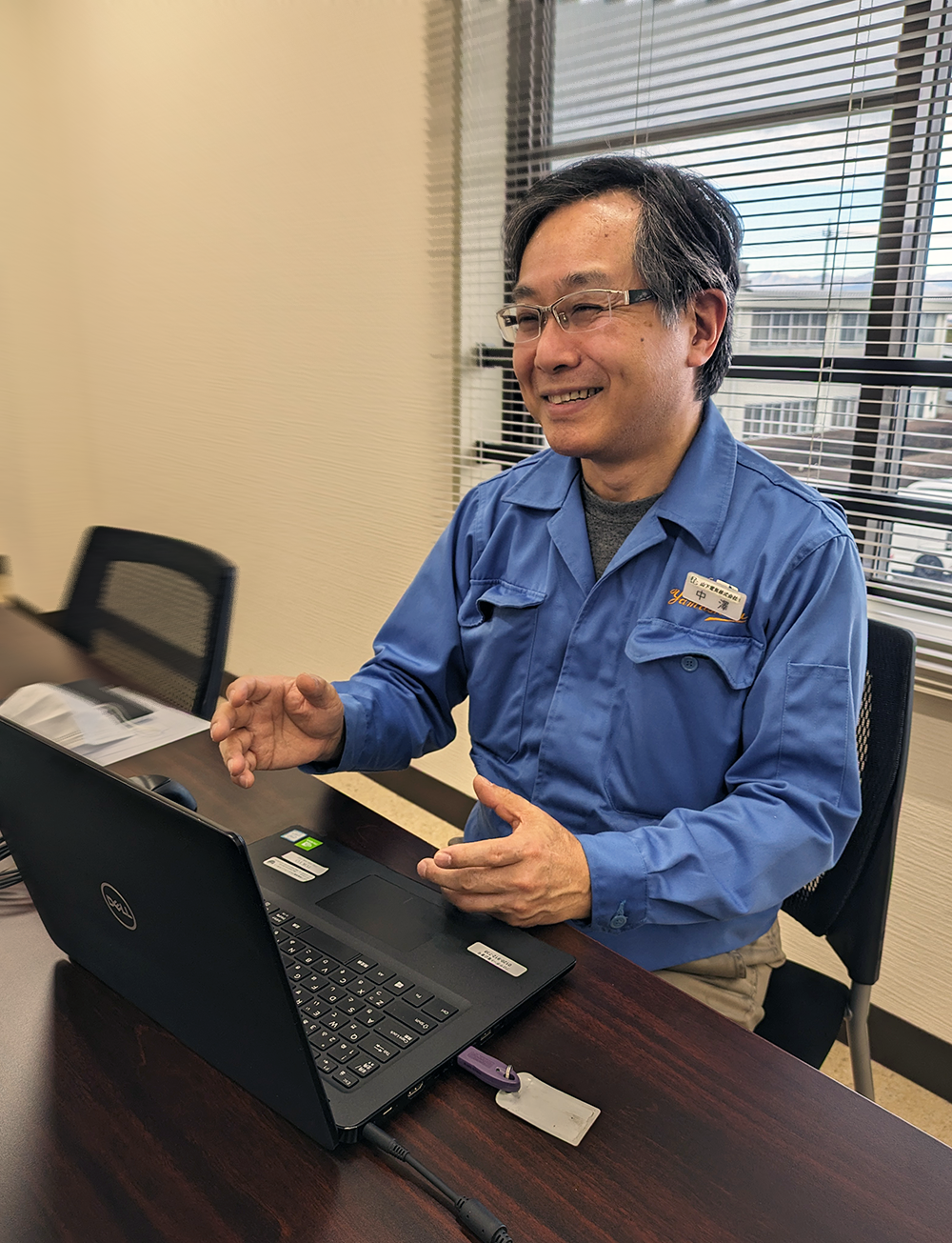
Kazunori Nakazawa
Please tell us about your company's features.
Two-color molding is a technology that combines different materials in a single molding process.
Recently, it has been widely used for illuminated buttons on car stereos and air conditioners, as well as for functional components with waterproof, dustproof, and vibration-resistant features. We also offer cassette molds (*1) for two-color molding, allowing us to quickly and inexpensively prototype products to see if the functionality our customers desire can be achieved through two-color molding.
In terms of molds, we also possess a patented technology called "Y-HeaT."
This technology precisely controls the temperature inside the mold to eliminate weld lines (*2) that occur during resin molding. In addition to molds, we also manufacture jigs used in the painting process.
Metal jigs develop a paint film over time, which requires peeling. However, plastic jigs can be discarded and recycled after a few uses. Because it is a jig, molds can be easily standardized, contributing to total cost reduction.
This is perhaps another advantage of our in-house integrated production.
*2 Weld line: A molding defect that occurs during injection molding, where molten resin flows together inside the mold, leaving a linear mark.
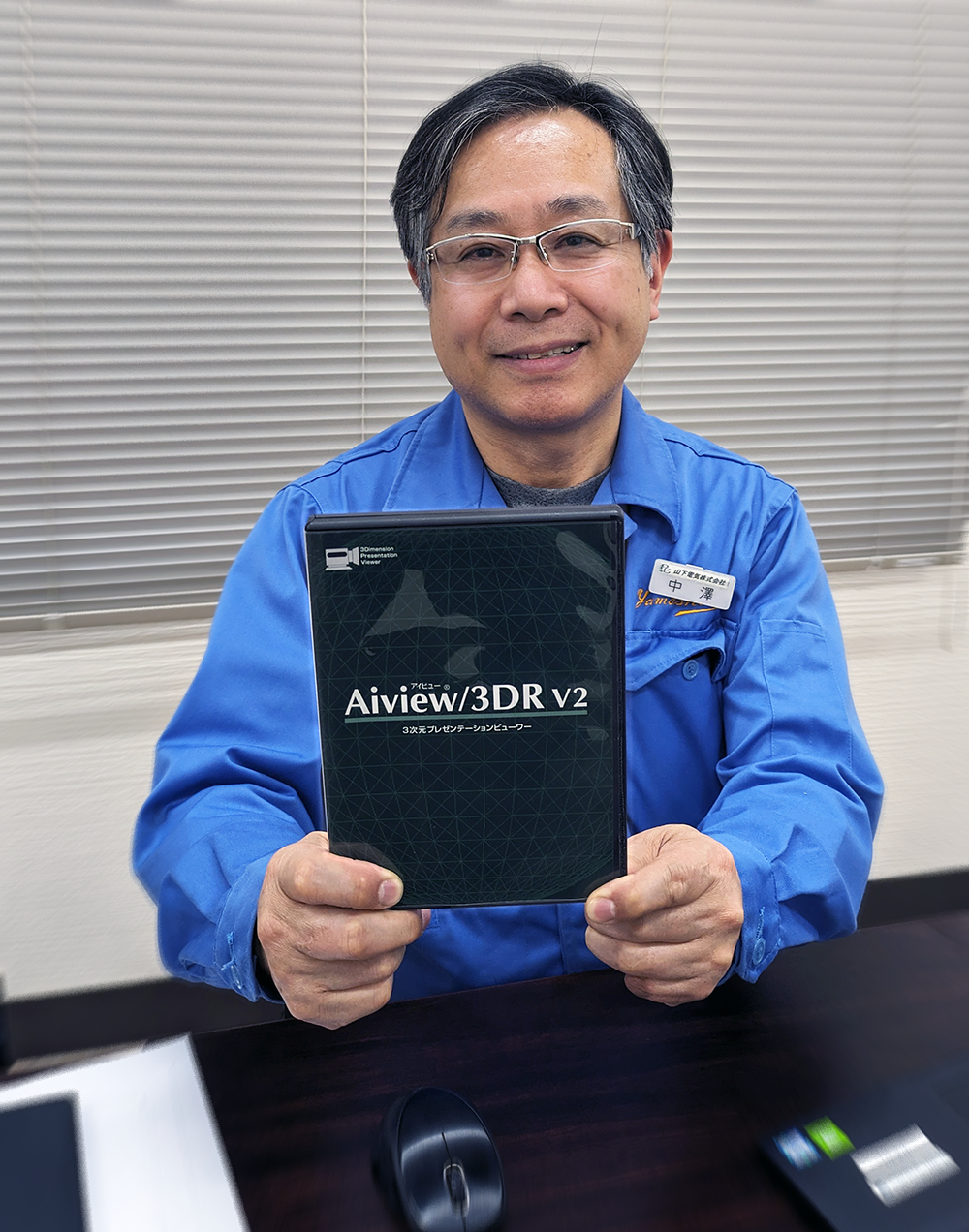
Aiview/3DR and Mr. Nakazawa (successor software is 3DFovi)
How did you find out about our products?
That's when we discovered and adopted C-Set's "Aiview/3DR" (*3), a 3D viewer. It was very convenient for checking cross sections and measuring dimensions. As we were using it, we began to see an increase in the number of things we wanted to do, and our distributor introduced us to "3DTascalX." It was a product from the same manufacturer, and it had all the features that "Aiview/3DR" lacked, so we quickly adopted it.
What problems did you face before the implementation?
Two-color molding generally involves separate molding times for each material, with primary and secondary molding. This involves determining the ratio of materials within a specified thickness based on the customer's design data, and other conditions unique to two-color molding. If these special conditions are not thoroughly considered in advance with the customer or within our company, problems may occur when the molding actually begins. Using 2D drawings would have taken a considerable amount of time.
What made you decide to buy it?
It's easy to use. I've had experience using various 3D CAD and CAM systems, so I can say this: you can easily reach your goals. I think the ease of use is very appealing.
KODAK Digital Still Camera
What features do you use? And what are the results?
Furthermore, after implementing it, I realized that it could also output native data from the 2D CAD we were using at the time, so I often use it to create 2D drawings of 3D data. In particular, when manufacturing mold replacement parts, we often process them in 2D or 2.5D, so the ability to quickly convert cross sections and contours into 2D is very useful.
Even with molded products, we sometimes create 2D drawings of cross sections to identify issues unique to two-color molding and propose shapes to our clients. On a more detailed note, I also use it to create 3D data images to attach to mold revision histories and internal improvement activity reports. Having 3D and cross-sectional images makes these instructions and documents much easier to read.
Also, when outsourcing the mold polishing process, we had our partner manufacturer introduce "3DFovi" to us, and by color-coding the target areas on the 3D data, we were able to communicate without any errors. It's a bit rough to quantify the benefits, as we've been using it for a long time and it's a bit of a stretch to say, but considering that we used to do these considerations and work using 2D drawings, I'd say we've reduced the amount of work by at least 1/10. Furthermore, I believe the accuracy of product considerations and the speed of responses, which are unique to two-color molding, have greatly improved.
Over the past 20 years, have you considered using other viewers or software?
I wasn't too tempted. Other departments within the company introduced me to other software, but I'm in love with "3DTascalX" (lol).
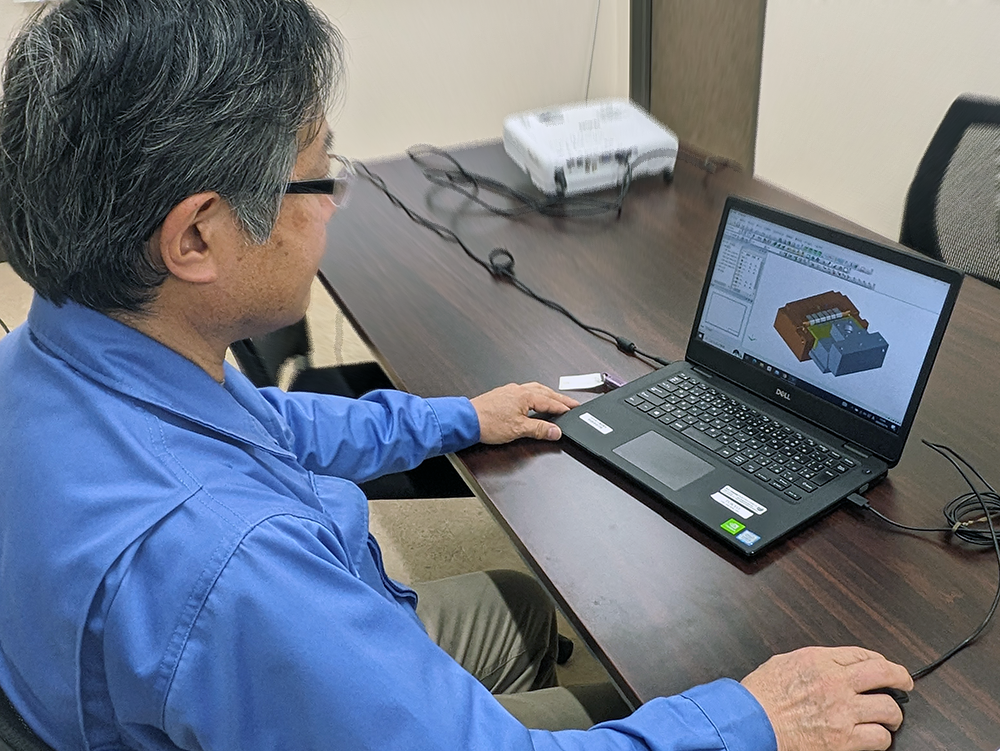
Future Plans
Also, I heard that 3DTascalX can now be converted to a floating license from a single license, so I would like to consider that.
YAMASHITA ELECTRIC CO., LTD.
3DTascalX/Light Catalog DownloadYAMASHITA ELECTRIC CO., LTD.
https://www.yamashita-denki.co.jp/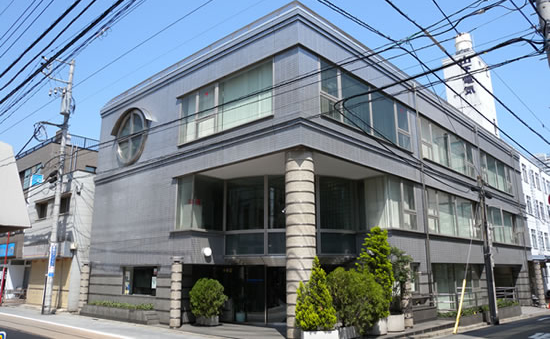
| Head Office | 3-6-33 Minamishinagawa, Shinagawa-ku, Tokyo |
|---|---|
| Founding | April 1936 |
| Capital | 100 million yen |
| Number of Employees | 7 executives, 176 full-time employees, 14 part-time/casual employees (as of December 2023) |
| Business content | Plastic molding products, plastic molds |
Contact us here for development requests or consultations.