






Customer Case Studies
We have great confidence in their technical capabilities and responsiveness, as they have been able to continue development and support for such a long period of time despite the wide variety of software available.
Automobile
Construction equipment
Die casting
Gravity casting
Medical devices
Robot
Sand casting
Data conversion
Geometry comparison
Mass production study
Sales quotation
Number of Installations:
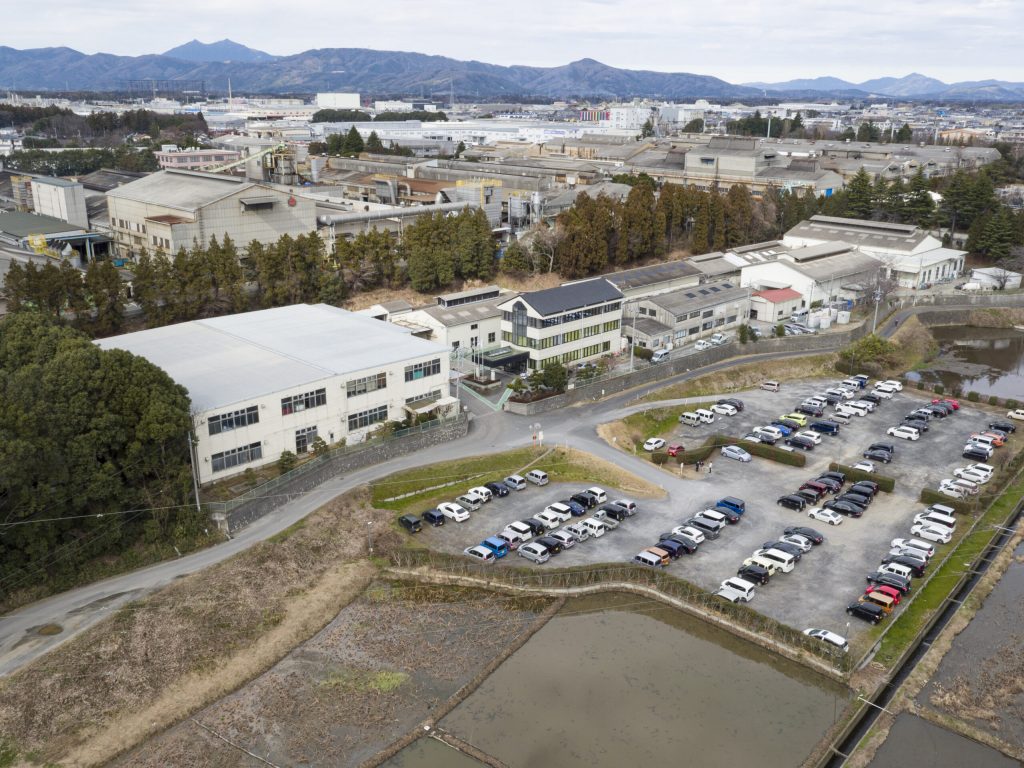
KURITA ALUMINIUM INDUSTRY CO., LTD.
Located in Tsuchiura, Ibaraki Prefecture, KURITA ALUMINIUM INDUSTRY CO., LTD. is a parts manufacturer that handles the entire production process of aluminum castings for automobiles, from casting to machining and assembly.In recent years, the company has expanded beyond automobiles to produce parts for construction machinery, heavy machinery, medical equipment, railways, robots, and more. The company's founder was a former employee of the pre-war aircraft manufacturer Nakajima Aircraft Company (now Subaru), and as a result, the company still does a lot of business with Subaru today.
This year marks the 72nd anniversary of the company's founding, and we spoke with Toru Ueki, Director and General Manager of the Technology Development Department.
For our third installment, we visited KURITA ALUMINIUM INDUSTRY CO., LTD.
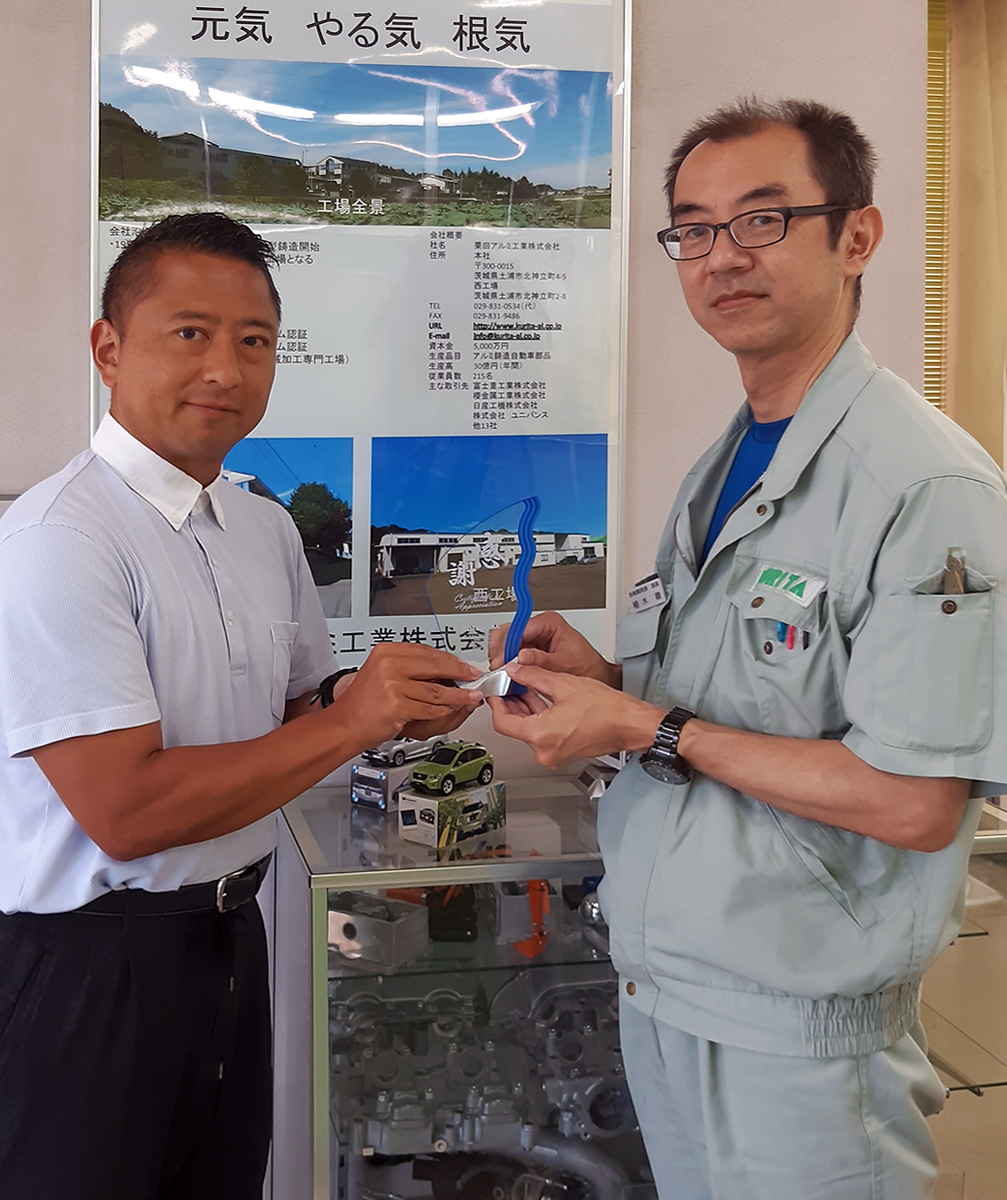
Presentation of commemorative gifts
Please tell us about your company's features.
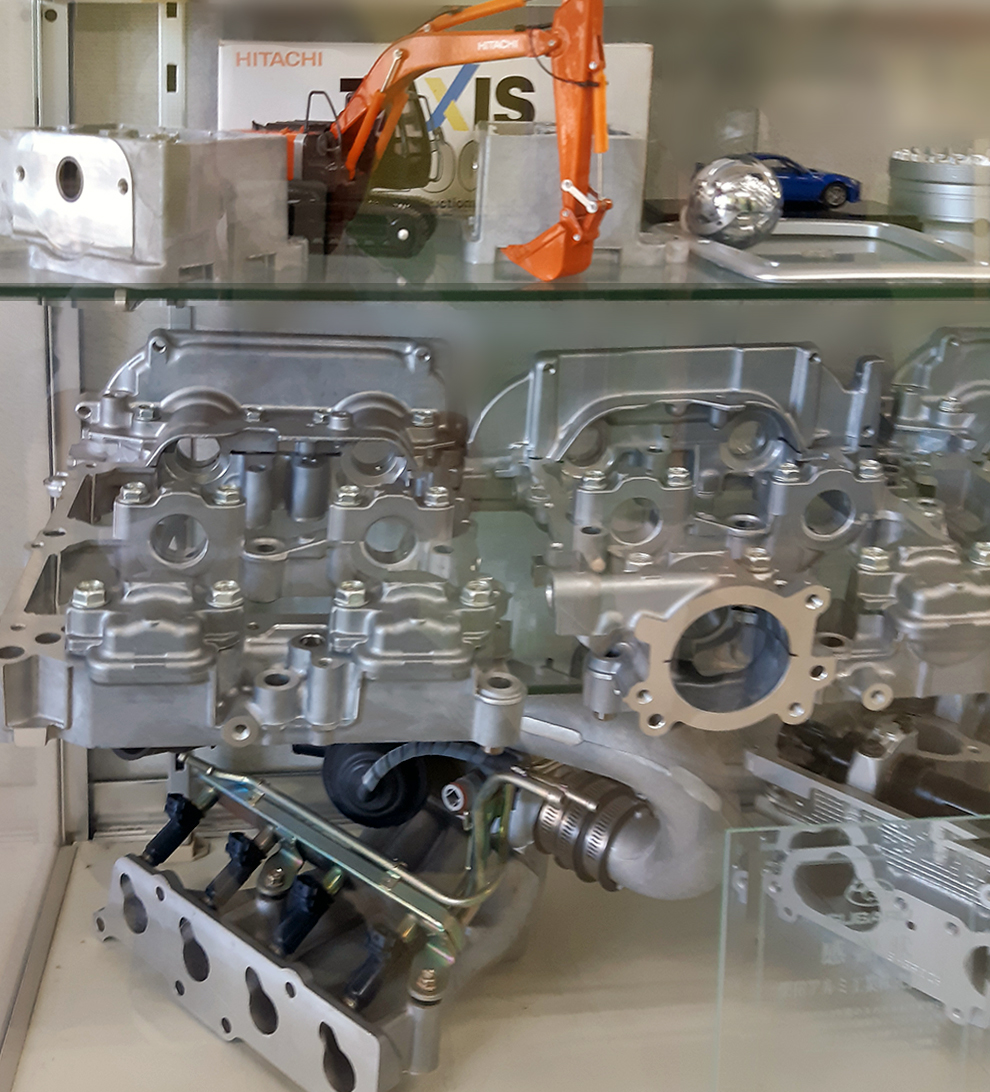
How did you find out about our products?
What problems did you face before the implementation?
Due to confidential information management reasons, the WS (workstation) on which the 3D CAD is installed is isolated from the company network. At the time, if you wanted to view 3D data, you had to go all the way to the WS location to view it. We thought that if we could view 3D data more easily, it would make things like internal meetings and creating presentation materials easier, so we began looking into a 3D viewer.
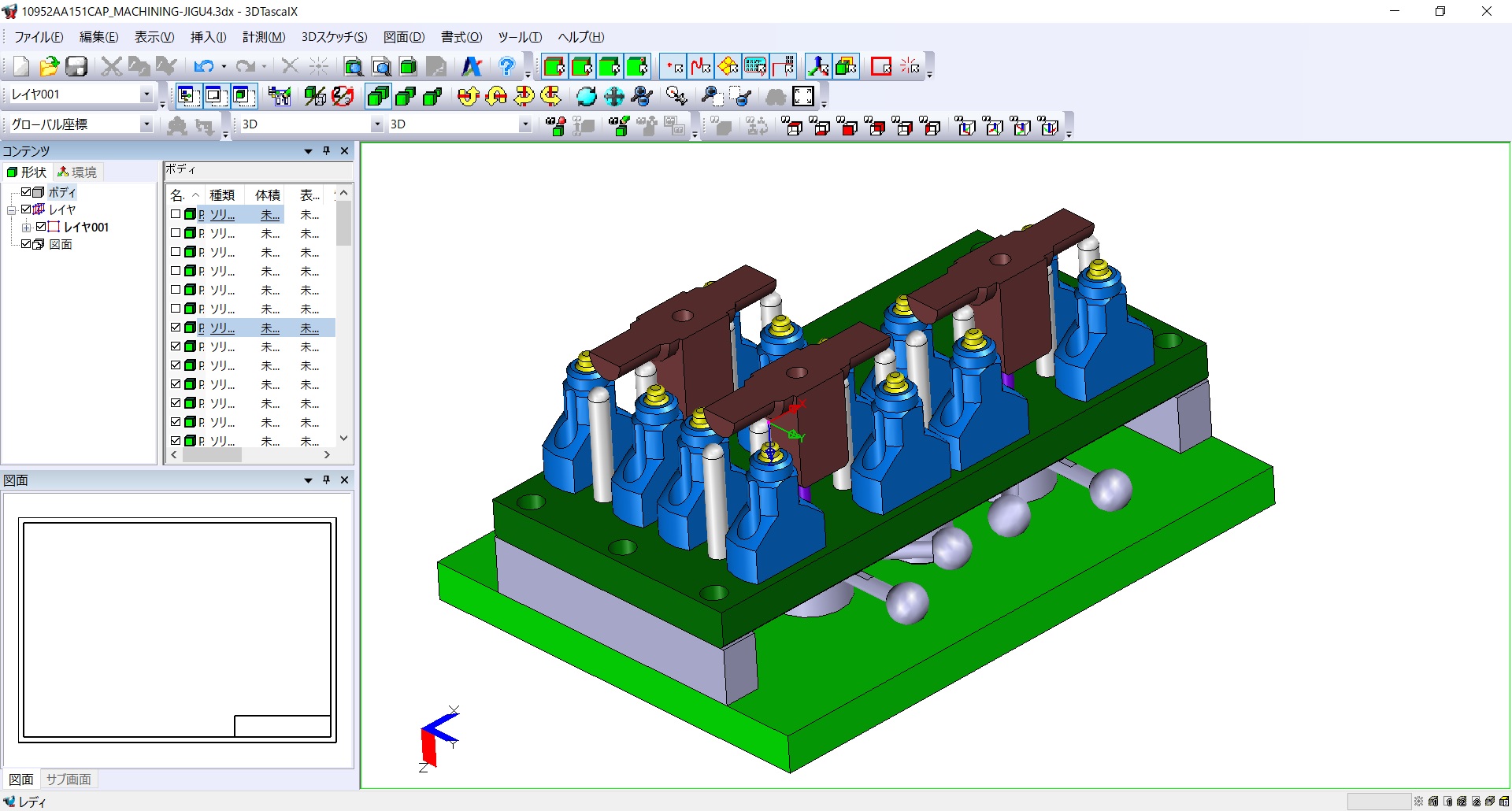
Product 3D data image 1
What made you decide to buy it?
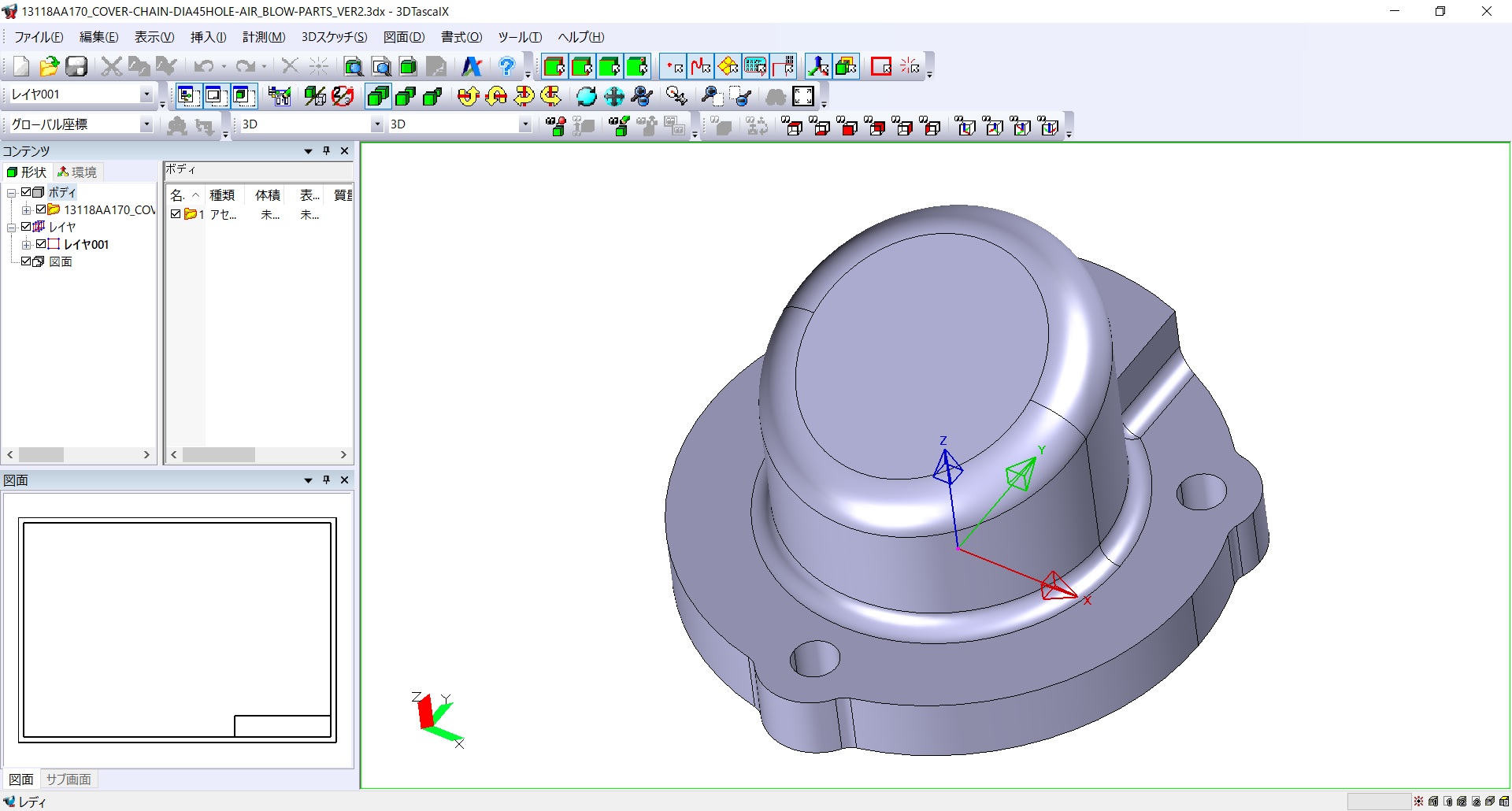
Product 3D data image 2
What features do you use? And what are the results?
The sales department also frequently uses it when creating estimates. For casting estimates, we calculate the maximum outer dimensions and volume, as well as the mold clamping force using the "projection plane creation function." While modern 3D CAD systems have the same function, with 3D CAD at the time, we had to cut the cross section and then select the outline in 2D CAD to calculate the projected area. It's so much easier now.
Also, when estimating machining, we use "3D ⇒ 2D drawing" to consider processes and tool paths.
In terms of functionality, I like the ease of dimensional measurement. There are some parts that 3D CAD cannot extract well, and I think that features like R detection for cylindrical shapes are particularly useful.
I also often use the "design change mode." For mass-produced parts, there are several design changes before launch, so the shape comparison and color-coding function is very helpful. This function is also available in 3D CAD, but it takes time because it performs a Boolean operation to subtract the product shape from the product shape and find the difference. Also, two processes are required to see the increase or decrease. With 3DTascalX,
the increase or decrease can be seen in one run, and I think the processing is fast.
Over the past 20 years, have you considered using other viewers or software?
To be honest, I have considered it (lol). I looked into using a communication tool that would allow me to communicate with mold manufacturers while sharing a single 3D data set. However, I gave up on the idea because it required both parties to purchase licenses. I also looked at inexpensive 3D CAD software. It was interesting because it had CAD functionality, but the data conversion accuracy was lacking, and the data import functionality for CATIA and other software was optional, so it wasn't as cheap as I expected.
Also, in the long run, many products, especially those from overseas, have suddenly withdrawn from the market, so it's scary to think about what would have happened if I had introduced them.
In that sense, I have great confidence in Seeset's technical capabilities and responsiveness, which have allowed them to continue development and support for such a long period of time despite the wide range of software available. I believe the concept of "more than a viewer, less than CAD" is what has allowed them to maintain this price, so I hope they will continue to adhere to this concept and continue developing products that are affordable yet deliver results that exceed expectations.
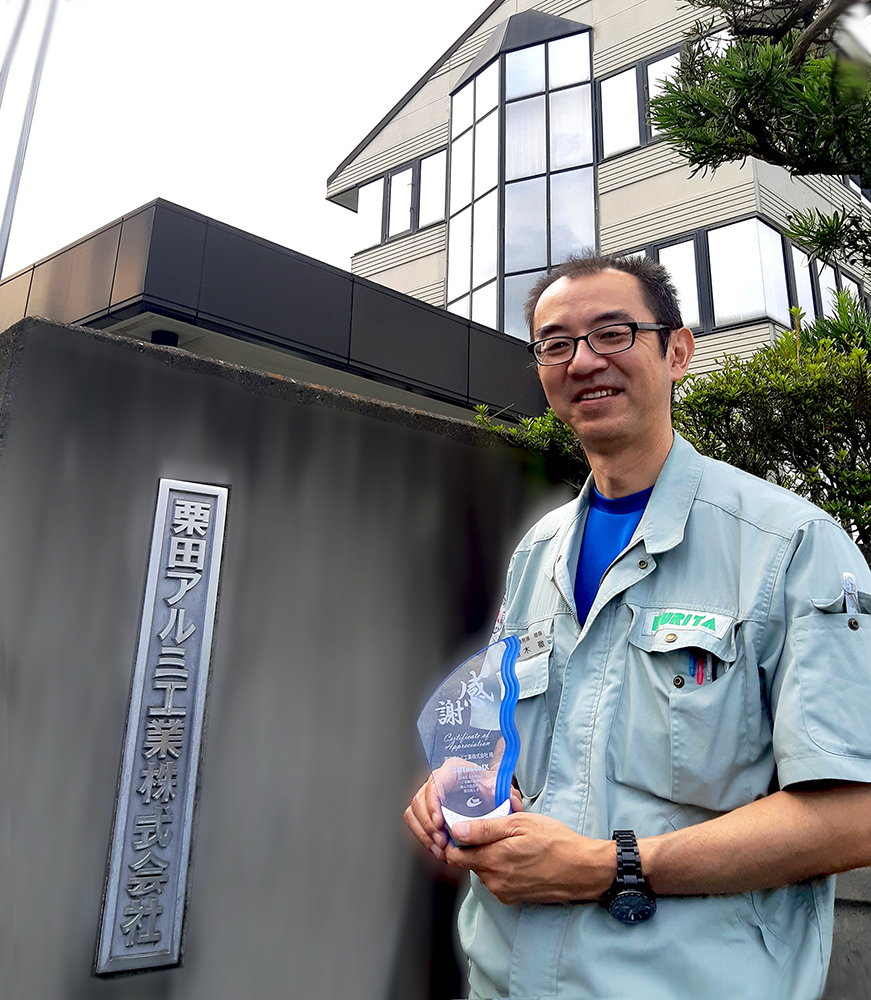
In front of the main gate
Future Plans
KURITA ALUMINIUM INDUSTRY Co., LTD.
3DTascalXCatalog DownloadKURITA ALUMINIUM INDUSTRY Co., LTD.
http://www.kurita-al.co.jp/| Head Office | 4-5 Kitakamidatecho, Tsuchiura City, Ibaraki Prefecture |
|---|---|
| Founding | May 1957 |
| Capital | 50 million yen |
| Number of Employees | 270 (as of September 2023) |
| Production items | Aluminum casting auto parts, etc. |
| Factory details | Die-casting department, gravity casting department, machining department |
Contact us here for development requests or consultations.